 CHAT & ASK AI
 AI Search Engine
 AI Image Generator
 AI Youtube Analyzer
 Whatsapp Integration
Free Online AI Plagiarism Checker on Chat & Ask AI
The AI plagiarism checker within Chat & Ask AI provides a technical, neutral summary of how automated similarity analysis assesses text originality. Plagiarism is defined as the uncredited use of another author’s words or ideas. Detecting similarity matters because overlapping language or structure can indicate reused material, whether intentional or inadvertent. The system examines submitted text for recurring patterns and overlap signals across internal indexes and accessible external sources, producing annotations that point to possible matches. Results are shown as patterns and highlights rather than definitive statements about authorship, intent, or academic misconduct.
Try for Free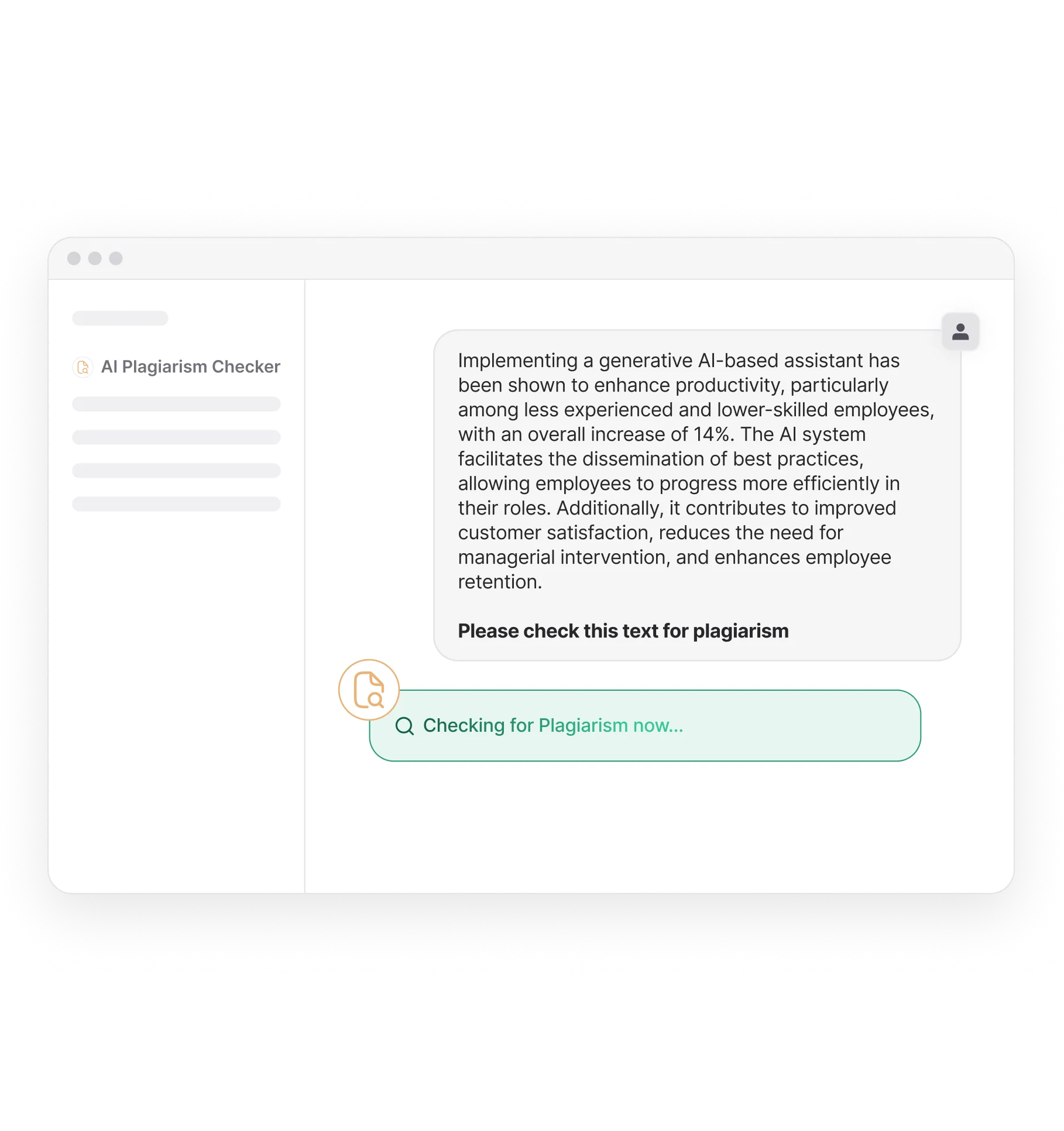
Detecting AI-Generated and Human-Written Text
Using an online AI plagiarism check tool should be easy and effective. Ask AI's process is simple, saving you time while giving you clear results.
How AI-Based Plagiarism Detection Works?
AI-based plagiarism detection combines linguistic analysis, statistical matching, and indexed comparison to identify text overlap. Input is first preprocessed by normalizing punctuation, tokenizing sentences, and removing formatting differences. Language models and similarity metrics then analyze sentence structure, vocabulary, and syntactic patterns. Methods include n-gram matching, semantic embeddings, and fuzzy matching to capture exact matches and many forms of paraphrasing.
Get Accurate & Instant Results with AI Plagiarism Tool
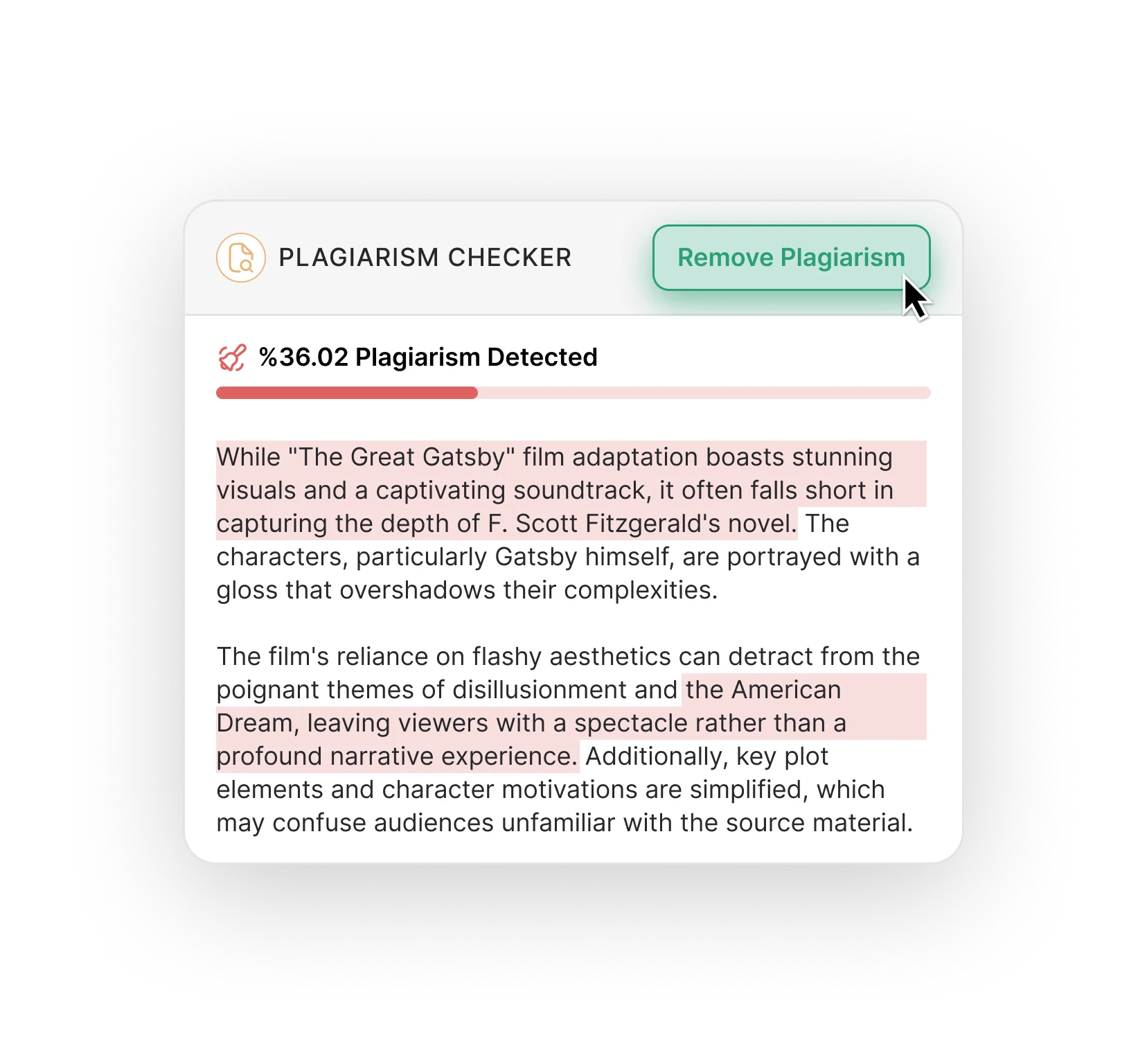
Similarity signals come from lexical overlap (shared words and phrases), structural similarity (parallel sentence or paragraph organization), and semantic proximity (related meanings identified by embeddings). The system cross-references these signals against indexed content sources and internal corpora to surface potential matches. Typical outputs include highlighted segments, contextual snippets from matched sources, and internal scores that indicate relative similarity. These outputs serve as descriptive indicators for human review rather than conclusive determinations of plagiarism or authorship.
Use Cases: Who Should Use the Plagiarism Checker?
Plagiarism detection is essential for students, educators, content creators, and publishers who want to ensure originality and protect credibility. In academics, it helps students, teachers, and researchers confirm that essays, theses, and papers are authentic while supporting proper citation practices. For bloggers, writers, and digital marketers, checking plagiarism safeguards SEO performance and audience trust by ensuring unique website content, articles, and campaigns. Editors and publishers also rely on plagiarism tools to evaluate manuscripts and journals, minimizing copyright risks and ensuring only original material is released.
.webp?alt=media&token=9028e49b-893d-41c9-a507-f49250892ff0)
Frequently Asked Questions
What does an AI plagiarism checker detect?

How does the tool evaluate text similarity?
Can the checker identify AI-generated content?
Does the system provide a percentage score for similarity?
Does a high similarity score always mean plagiarism?
How does the checker highlight matching or repeated patterns?
Can AI plagiarism checkers misclassify human-written text?
Does the tool compare my text to online sources?
Are the detection results always accurate?
Does the tool detect paraphrasing or rewritten content?
Protect your originality and make sure your work is credible with the Ask AI plagiarism checker—try for free.
Get Started Today CHAT & ASK AI 