
 AI Search Engine
 AI Image Generator
 AI Youtube Analyzer
 Whatsapp Integration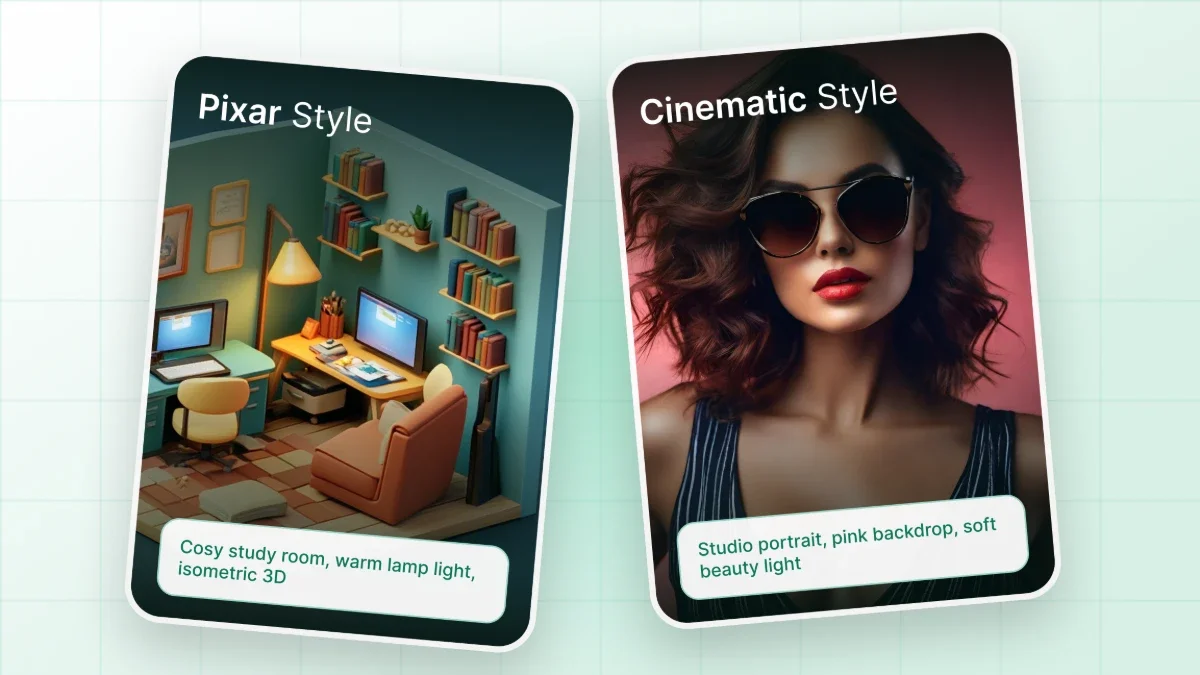
What Defines a Pixar Style AI Image
A Pixar style AI image is defined by stylized 3D characters with exaggerated, appealing proportions, rendered with soft light and simplified surfaces. Heads and eyes are larger than real anatomy allows, noses and hands are simplified, and every shape leans toward round, readable silhouettes. Surfaces look tactile without being photoreal. Skin glows slightly where light passes through it, fabric shows gentle texture, and backgrounds stay detailed but never compete with the character.
Emotion carries the style as much as rendering does. Characters hold clear poses with expressive eyebrows and posture that tell the story in a single frame. Lighting is usually warm and motivated, coming from a window, a lamp or a sunset, with a soft rim light separating the character from the background.
Image models respond to these traits when they are named directly. Terms such as "3D animated feature film style", "stylized proportions", "subsurface scattering", "soft global illumination" and "rim light" consistently steer results toward the animated look. Each term describes something visible, and that matters more than any single reference name.
What Makes an AI Image Look Cinematic
An AI image looks cinematic when the prompt describes how a camera, a lens and a lighting crew would capture the scene. Ordinary prompts describe only what is in the frame. Cinematic prompts also describe how the frame is built. That includes the aspect ratio, the distance between camera and subject, depth of field and the direction and color of light.
Several elements do most of the work. A wide 2.39:1 frame immediately reads as film. Focal lengths like 35mm for environmental shots or 85mm for portraits control perspective and background blur. Volumetric light, haze and atmospheric depth add the layered quality of a set. Color grading terms such as "teal and orange", "muted desaturated tones" or "warm amber highlights" shape the mood the same way a colorist would.
Composition language completes the picture. Phrases like "low angle shot", "over the shoulder", "symmetrical framing" or "leading lines toward the subject" give the model a clear camera position. A good movie prompt reads less like a description of an object and more like a note from a director of photography.
The Structure of a Strong Movie Prompt
A strong movie prompt follows a consistent order: subject first, then action, setting, style, camera, lighting, color and format. Models weigh earlier words more heavily, so the most important element should come first. The table below breaks down each part with an example phrase.

