
 AI Search Engine
 AI Image Generator
 AI Youtube Analyzer
 Whatsapp Integration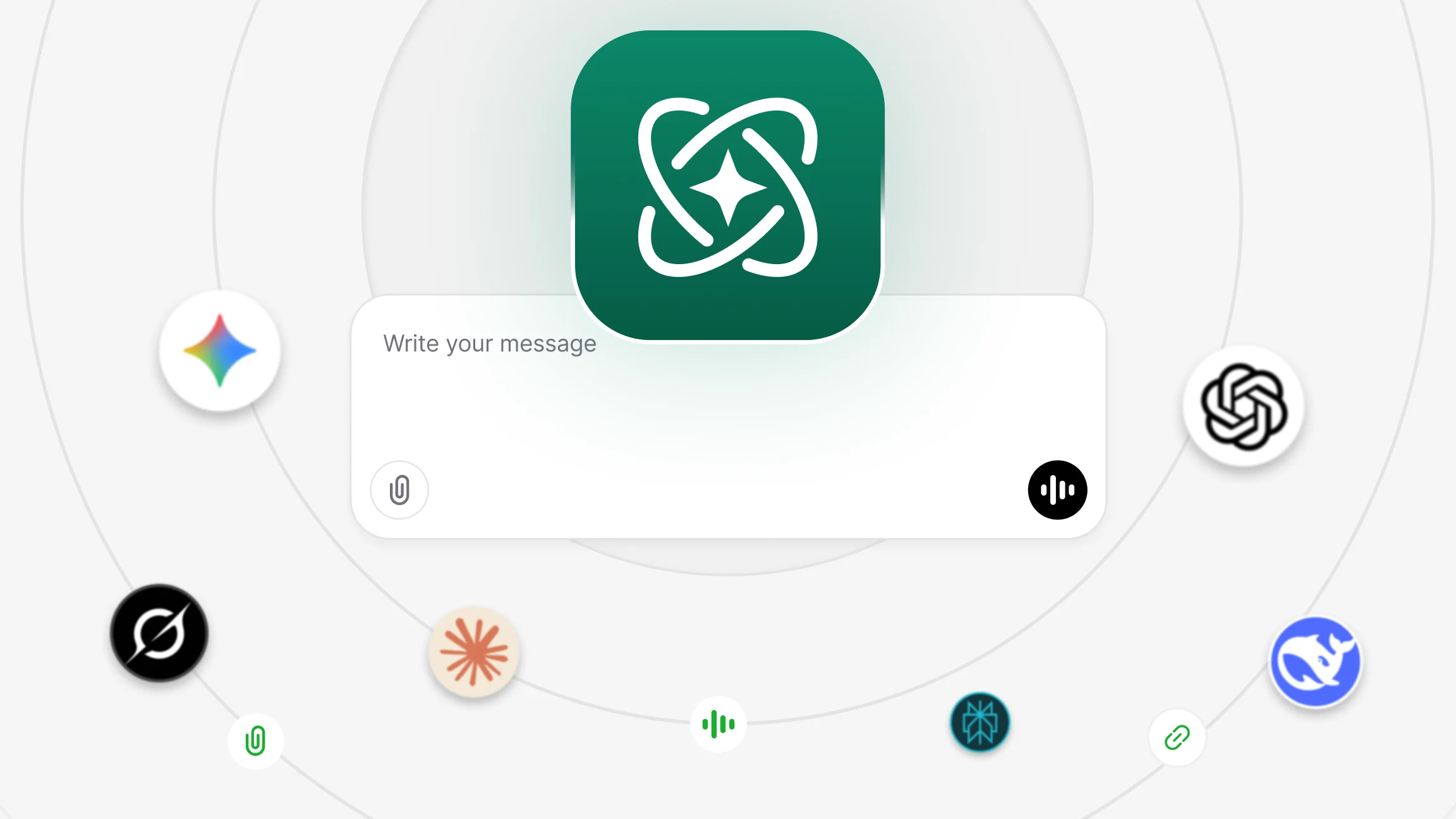
The History Behind National AI Day
The story of artificial intelligence did not begin with large language models or chatbots. It began in 1950, when Alan Turing published a paper asking whether machines could think. Six years later, the term "artificial intelligence" was formally coined by mathematician John McCarthy at a Dartmouth workshop that brought together some of the sharpest minds in computing and cognitive science. That gathering is widely regarded as the founding moment of AI as a research field.
Progress was slow for decades. The 1970s and 1980s brought what researchers called AI winters, periods when funding dried up and ambitions outpaced what the technology could actually deliver. The revival came gradually, driven by increases in computing power, larger datasets, and new algorithmic approaches. By the 2020s, large language models had moved AI out of research labs and into everyday tools used by hundreds of millions of people.
National AI Day itself was established in 2025 by the National Day Calendar, with July 16 chosen as the annual date. A related observance, Artificial Intelligence Appreciation Day, was created earlier in 2021 by A.I. Heart LLC and also falls on July 16. Both share the same spirit: using the date to promote education, ethical dialogue, and a wider understanding of what AI actually is and does.
Why National AI Day Matters in 2026?
The global AI market was valued at approximately $150 billion in 2023 and is projected to exceed $1.8 trillion by 2030. Over 78 percent of global companies now report using AI in some capacity. These numbers reflect a shift that has happened faster than most forecasts predicted.
What makes 2026 a particularly meaningful year for this observance is the breadth of the conversation. AI is no longer primarily a topic for technologists. Educators are debating its effect on critical thinking. Healthcare systems are integrating it into diagnostics and treatment planning. Regulators in the EU, the US, the UK, and Japan are developing frameworks to govern how AI is built and deployed. The questions AI raises about data privacy, labor, bias, and accountability have moved from academic papers into public policy.
How to Mark National AI Day 2026?
You do not need a technical background to participate meaningfully. A few approaches that are worth your time:
Experiment with a tool you have not tried
Generative AI for writing, image creation, research, or coding is widely accessible. If you have only ever used one AI assistant, July 16 is a good day to try a different model and notice where the differences actually show up in the output.
Take a course or watch something substantive
Online learning platforms offer free and discounted AI literacy courses around this time of year. Tech companies including Google, Microsoft, and IBM often release educational content and open source tools. Even a one-hour documentary or a well-researched article on AI ethics counts.
Have a real conversation about it
Talk with colleagues, students, or family members about how AI is affecting their work or daily life. The most valuable conversations about AI right now are not happening in boardrooms; they are happening between people figuring out what to do with these tools in practice.
Engage with the ethical dimension
Organizations focused on responsible AI development use this day to publish resources and launch awareness campaigns. Looking at what groups like the AI for Good Foundation are working on is a grounding reminder that the technology is not value-neutral.
Share something useful online
Use the hashtags #NationalAIDay or #AIAppreciationDay to contribute something to the broader conversation, whether that is a personal observation, a resource you found helpful, or a question you have been sitting with.
How Chat & Ask AI Fits Into This?
If National AI Day is about engaging with AI seriously, Chat & Ask AI is a practical place to do that. The platform gives you access to models powered by OpenAI, Anthropic, Google, xAI, DeepSeek, Perplexity, Meta, and more in a single interface, including the latest model releases across all of these providers. You can switch between them based on what you are trying to do: use Claude for a document you need to analyze, Gemini for a research query that needs current information, or GPT-5 for general drafting.
Beyond model access, Chat & Ask AI includes an AI web search feature for sourced answers, an AI image generator for visual tasks, a link analyzer that lets you ask questions about any web page, an AI writer for content creation, and integrity tools including an AI detector and plagiarism checker. If you are looking for a way to mark National AI Day by actually using AI productively, it is a reasonable starting point.

