
 AI Search Engine
 AI Image Generator
 AI Youtube Analyzer
 Whatsapp Integration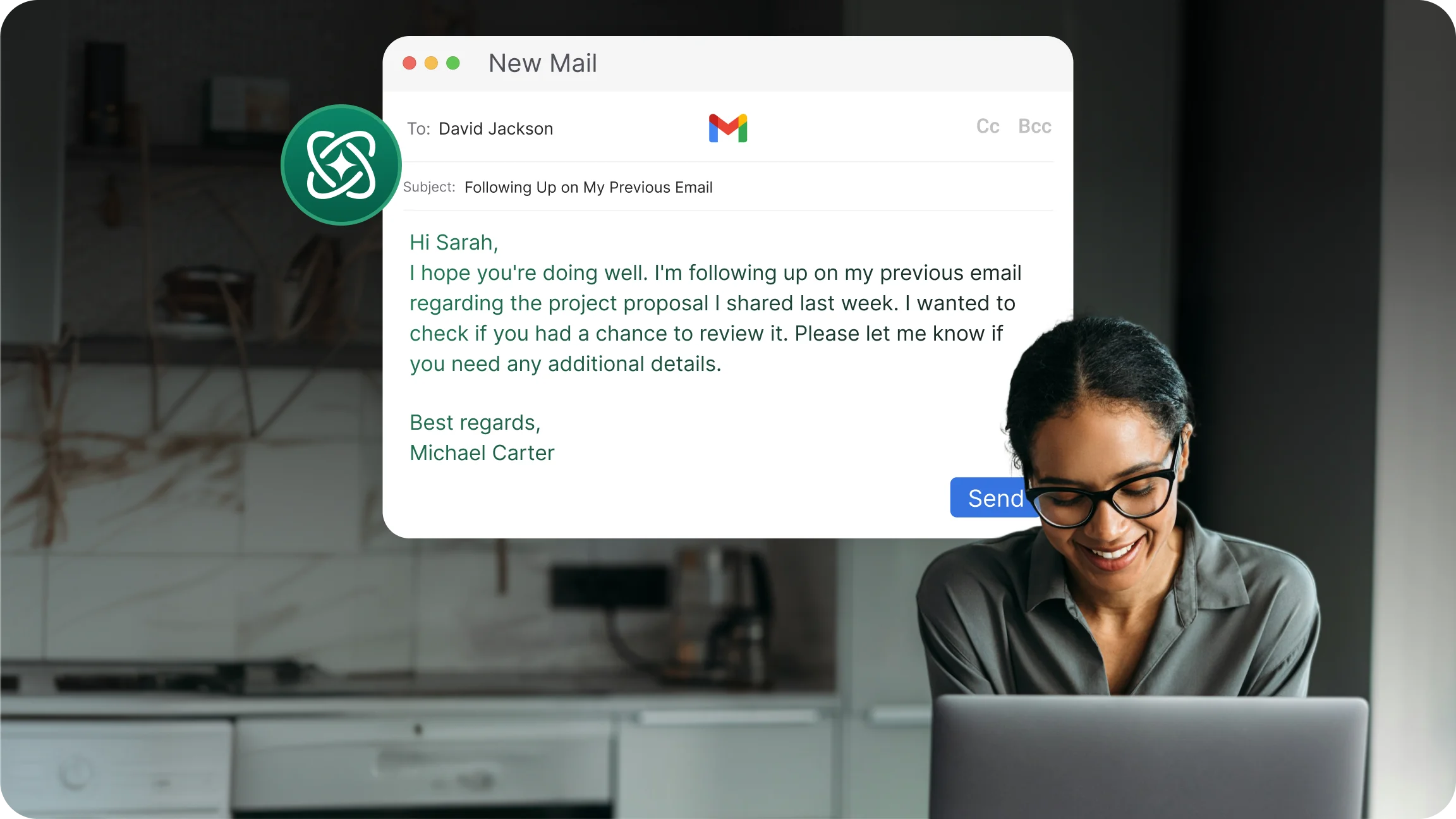
What to Include in a Follow-Up Email
An effective follow-up email includes a clear subject line, a reminder of the previous interaction, a short message with purpose, and a direct request or next step.
Structure the message with a one-line reference to the prior contact (date, event, or topic), a brief clarification or new detail that adds value, and a single call to action. Avoid repeating the full original message; highlight the key point that matters now. Keep paragraphs short and use plain language to improve readability and increase the chance of a response. Close politely and include contact details in the signature.
When to Send a Follow-Up Email
Follow-up emails are typically sent two to three business days after the first message, or after an interview or application if no response has been received.
Timing depends on the situation: after interviews, send a thank-you or brief note within 24–48 hours; after applications, wait 7–10 business days before checking in; after meetings, send a recap within 24–48 hours. Following up too soon can seem impatient; waiting too long may reduce relevance. Consistent timing and a clear purpose for each message help maintain professional communication.
Follow-Up Email Examples for Common Situations
Follow-up emails vary by situation; structured examples clarify tone, structure, and length. Examples below show concise, neutral formats used in real workflows.
Follow-up after an interview:
Subject: Follow-up: [Position] interview on [Date]
Hello [Name],
Thank for the interview on [date]. Interest remains strong in the [position]. Any update on the hiring timeline or next steps?
Best regards,
[Full name] | [Phone]
Follow-up after no response to an email:
Subject: Quick follow-up on [Topic]
Hello [Name],
Checking in on the message sent on [date] about [brief topic]. Is there an update or a preferred time to discuss?
Regards,
[Full name]
Follow-up after a job application:
Subject: Application follow-up — [Job Title]
Hello [Name or Hiring Team],
Application submitted on [date] for [job title]. Interested to learn about the status and next steps. Available for a call if helpful.
Sincerely,
[Full name]
Follow-up after a meeting:
Subject: Notes and next steps — [Meeting Topic]
Hello [Name],
Thanks for meeting on [date]. Summary: [one-line summary]. Proposed next step: [specific action]. Available to move forward this week.
Best,
[Full name]
Short follow-up when time is limited:
Subject: Quick follow-up: [Topic]
Hello [Name],
Any update on [single question]? A brief reply is appreciated.
Thanks,
[Full name]
Common Mistakes to Avoid in Follow-Up Emails
Follow-up emails fail when they are too long, unclear, or written without purpose. Avoid these frequent errors to maintain professionalism.
Typical mistakes include sending messages too soon, repeating the original content without adding value, making messages overly long, and using impatient language. Each follow-up should add new context, ask one clear question, or propose a next step. Polite, concise wording and a clear subject line improve the likelihood of a response.
AI tools can assist in drafting structured follow-up emails by organizing message content and generating concise templates. AI can help refine tone, shorten messages, and ensure logical structure. Using an ai follow up email generator or an ai tool to write follow up email supports consistent workflows: generate a draft, edit key details, and send.
Chat Ask AI can be used as an ai email writing assistant to produce example follow-up messages and adjust wording while preserving a professional format. Try Chat & Ask AI for free.

