
 AI Search Engine
 AI Image Generator
 AI Youtube Analyzer
 Whatsapp Integration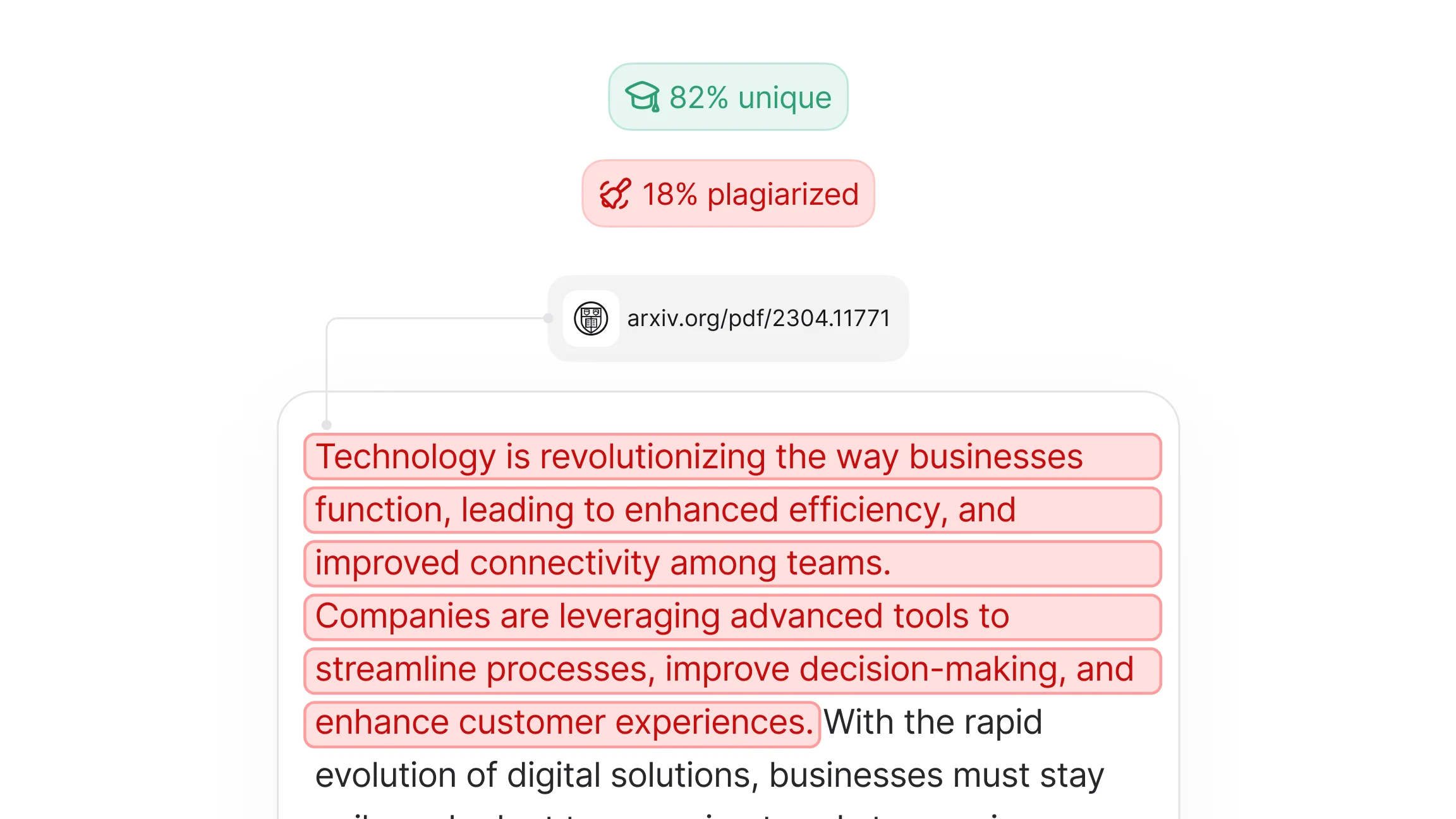
Why Plagiarism Checkers Matter in Academic and Professional Work
Plagiarism checks help maintain originality, trust, and accountability for student assignments, research papers, professional reports, and online content. Schools, journals, and workplaces use these tools to flag possible reuse so instructors, editors, or compliance teams can review context and citations. A reliable plagiarism tool highlights matching passages, quote misuse, or unattributed copying, but it does not replace human review or institutional policies. For example, Chat & Ask AI’s AI Plagiarism tool can show text overlap and potential source reuse to speed ethical review. Results serve as starting points for investigation: a highlighted match may be acceptable with proper citation or may need revision if attribution is missing.
What Plagiarism Scores and Percentages Actually Mean
A plagiarism checker percentage or similarity score shows the share of text that matches sources in the tool’s indexed databases—it is not a legal or moral ruling. Matches can come from quoted material, bibliographies, common phrases, shared definitions, or technical terms that legitimately appear in many works. High scores sometimes reflect long quotations or standard methodological language rather than intentional copying. Low scores do not guarantee originality if the database lacks certain sources or if content has been paraphrased without citation. Interpreting a plagiarism test means examining which passages match, the nature of the sources, and whether proper quoting and referencing are present. Instructors and editors should inspect highlighted sections and consider disciplinary norms before concluding misconduct.
How Accurate Are Plagiarism Checkers in Real Use?
Accuracy hinges on the breadth of indexed content (web pages, journals, student papers, books), the algorithm’s sensitivity to paraphrase, and how quotations and citations are handled. Common limitations include false positives—matches on common phrases or properly cited text—and false negatives—missed instances when sources are outside the database or heavily reworded. For code, a specialized code plagiarism checker that compares structure, variable names, and logic is usually more effective than general text checkers. Overall, plagiarism detectors are useful for screening and prioritizing review, but human judgment is necessary to confirm whether matching text constitutes improper copying or acceptable reuse.
Plagiarism vs Proper Citation: Where the Line Is Drawn
Plagiarism happens when another’s words or ideas are presented as original without proper credit. Proper citation and clear quotations separate legitimate use from unattributed copying. Quoted passages with quotation marks and a reference may appear in a plagiarism test but do not indicate misconduct if citation is correct. Paraphrasing that genuinely rephrases ideas and adds original analysis, with attribution, generally avoids plagiarism flags even if the underlying idea is common. Close paraphrase—changing only a few words—can trigger a high plagiarism checker percentage and may need revision. Different fields have varied expectations: some expect heavy citation of standard methods, while others require fresh wording. Careful documentation and transparent citations reduce ambiguity when a reviewer is asked to check my work for plagiarism.
Reviewing similarity results carefully is key to responsible writing. To explore how modern AI tools can support originality checks and text analysis, Try Chat & Ask AI for free and discover what advanced AI language models can do.

