Research and Web Answers
Perplexity is purpose-built for source-backed research. Every response surfaces cited links and referenced snippets, making it straightforward to verify a claim or trace where information originated. Sonar Pro and Sonar Deep Research extend this into multi-step research sessions where cross-checking claims across multiple web sources matters. The AI Search Engine follows the same retrieval logic, pulling answers across multiple live web sources in a single pass.
ChatGPT suits research tasks that benefit from iterative exploration, hypothesis testing, and structured synthesis across a longer session. Rather than surfacing citations as the primary output, ChatGPT builds on earlier turns to refine scope, generate summaries, and produce organized research outputs that develop across the conversation.
Writing and Content Creation
ChatGPT is the stronger fit for iterative writing workflows. Organized drafts, style variations, revision cycles, and structured outlines all benefit from GPT-5's multi-turn context retention and instruction-following across a sustained session. The AI Writer handles drafting directly within a single interface, working with research material gathered from either system.
Perplexity contributes to writing at the research and evidence-gathering stage, producing source-referenced summaries and concise notes that inform a draft. For the actual writing phase, ChatGPT's conversational architecture handles sustained document construction and iterative refinement more effectively than a retrieval-first system is designed to support.
Coding and Technical Tasks
ChatGPT handles coding tasks through stepwise debugging, explanatory outputs, and iterative refactoring within a conversational session. GPT-5's reasoning architecture keeps track of earlier context across a session, making it useful for multi-turn debugging where earlier decisions and error states need to stay in scope. The AI Chat PDF handles a related use case, working through technical documentation and reference files that feed into both research and coding workflows.
Perplexity contributes to coding at the lookup stage, retrieving relevant code snippets, documentation references, and quick answers from indexed web sources. For tasks that go beyond lookup into actual implementation and iterative debugging, ChatGPT's conversational reasoning handles the sustained work more effectively.
Using ChatGPT and Perplexity Through Chat & Ask AI
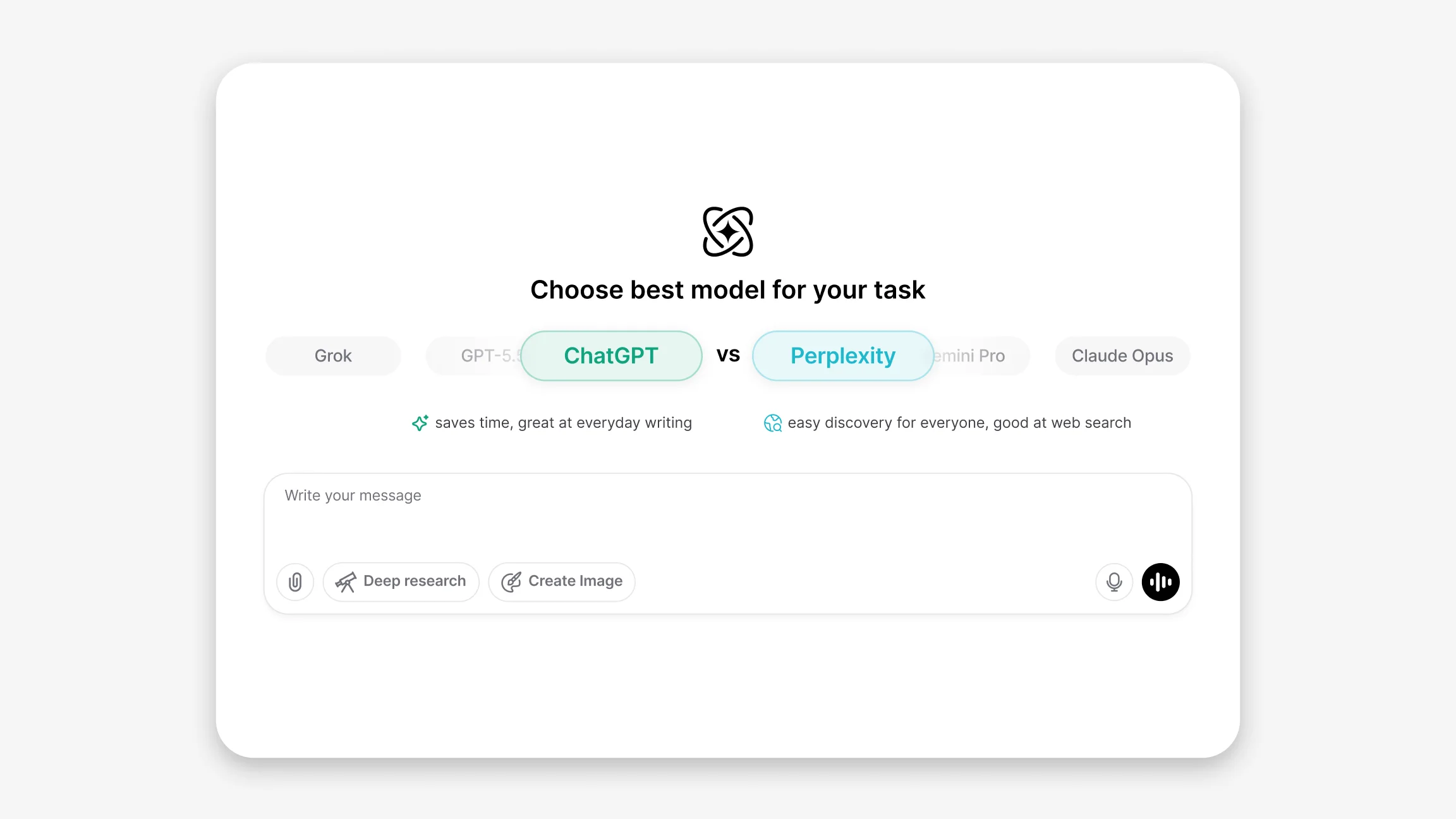
Chat & Ask AI brings both systems into the same interface, so a workflow can move from Perplexity based source retrieval into ChatGPT based iterative drafting and reasoning without switching platforms. GPT-5.5, GPT-5, and the Perplexity model are all accessible within the same workspace alongside every other leading AI model. Chat & Ask AI itself handles text, images, documents, and voice within a single session, which means the full research to draft pipeline stays in one place. Access ChatGPT and Perplexity together through Chat & Ask AI and compare how each one fits your own workflows.
ChatGPT vs Perplexity reflects a clear difference in workflow design. ChatGPT fits tasks that need structured conversational reasoning, iterative multi-turn refinement, and organized outputs across writing, coding, and sustained research. Perplexity fits tasks that need live web retrieval, traceable citations, and fast source backed summaries across research and fact checking workflows.

 AI Search Engine
 AI Image Generator
 AI Youtube Analyzer
 Whatsapp Integration