
 AI Search Engine
 AI Image Generator
 AI Youtube Analyzer
 Whatsapp Integration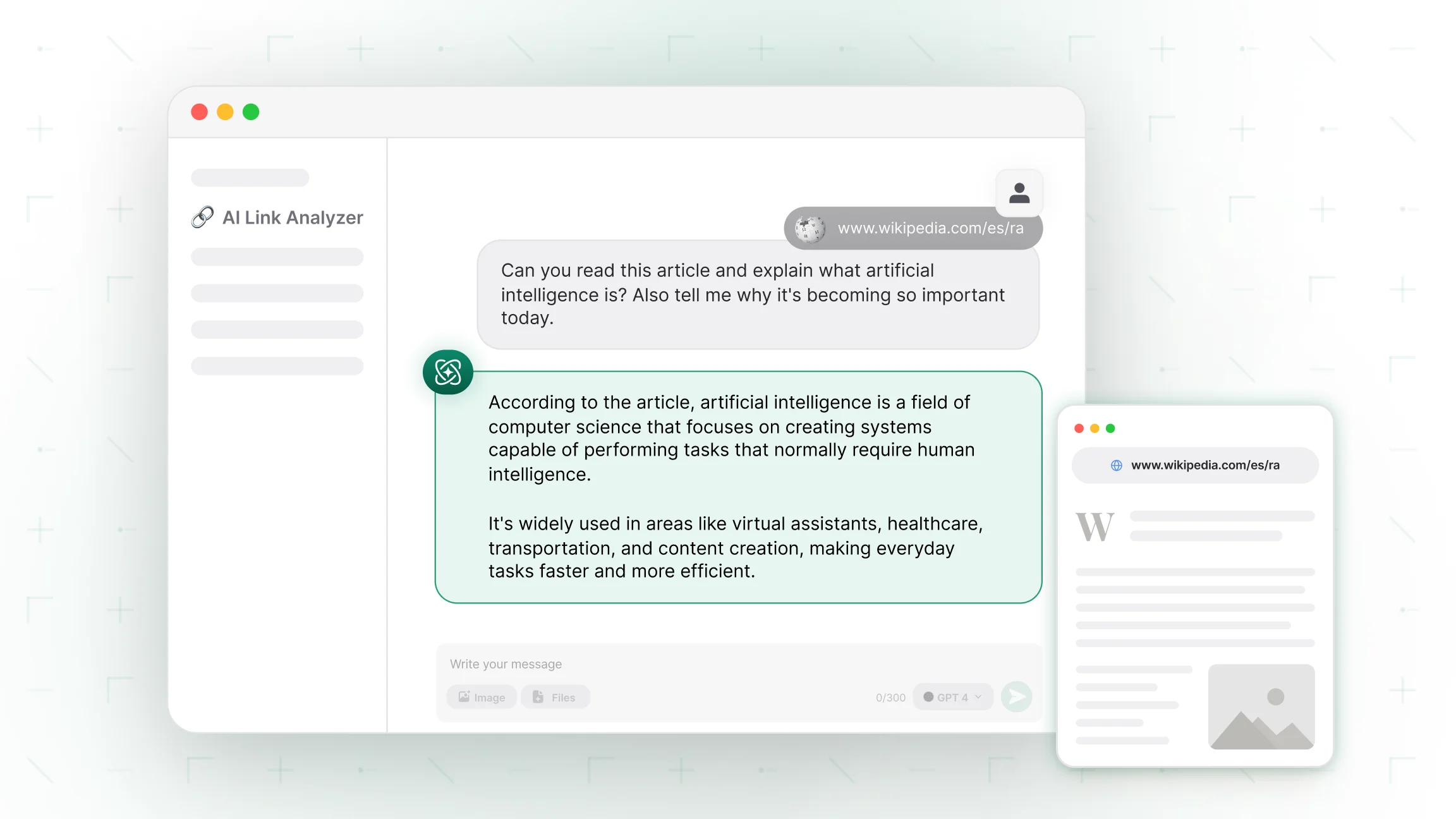
What It Means for AI to Read and Understand a Link?
An AI app that reads a link does more than simply open the page behind the URL. It processes the content, identifies the main ideas, and restructures that information into a summary or a direct answer to a question. This process applies across different formats, including standard articles, PDFs, and video transcripts, so the same basic mechanism can handle several types of source material.
Turning static content into something interactive means the underlying text or transcript is analyzed for structure and meaning rather than just displayed as is. A long report, for example, is broken down into its core arguments so a reader can ask about a specific section instead of scanning the entire document. This ongoing exchange around a single source is often set up through a AI Link Analyzer, where the conversation continues around one URL rather than ending after a single summary. This is what separates link reading from a simple webpage preview.
Chat & Ask AI for Link Reading, Summarization, and Deep Analysis
Chat & Ask AI allows a link to be pasted directly into a conversation, after which a structured summary is generated within seconds. From that summary, questions can be asked about the source material, allowing the conversation to move from a general overview into specific details without leaving the page. This turns a single link into an ongoing exchange rather than a one-time summary.
The platform supports a wide range of link types, including articles, research papers, and reports, converting each into a clear set of insights. Beyond the initial summary, follow-up questions can focus on a particular section, request further clarification, or compare two points made within the same source. This step by step approach means the content behind a link is explored rather than only condensed.
Because summarization and interactive analysis happen within the same workflow, a single conversation can move between a quick overview and a detailed discussion of the source material as needed. This combination is what allows Chat & Ask AI to function as a flexible tool for both fast research and closer reading, including reports shared as a document rather than a webpage, where a reader can chat with a PDF in the same way a standard link is discussed.
Other AI Tools That Can Open and Read Links
Different tools approach link reading with different priorities, and several specialize in one particular aspect of the process rather than covering all of them equally.
Myreader.ai focuses on summarizing and converting links into readable or audio formats.
Link reader tools built into chatbot platforms specialize in structured content extraction from a given URL.
Browser-based AI assistants can summarize a page directly within the browsing session without a separate app.
Some tools focus on extracting structured data from websites rather than producing a text summary.
AI readers can convert a linked article into spoken audio for listening rather than reading.
Each of these approaches reflects a different use case, from quick audio conversion to detailed data extraction, rather than a single standard method that all tools follow.
What Types of Links AI Can Process?
Most AI link readers are built to handle standard web pages, including blog posts and news articles, as a baseline capability. Beyond that, many tools also support research articles and PDF documents, since these formats typically contain structured text that can be extracted and summarized in a similar way to a webpage. Video links are supported by some tools as well, usually by processing the transcript or captions rather than the visual content itself.
The specific formats supported depend on the tool in question, and not every AI app reads every link type in the same way. A tool designed primarily for articles may not process a video link, while a tool built for broader use may handle several formats within the same interface.
How People Use AI to Read and Analyze Links?
A student working through several research papers for an assignment can paste each link into an AI app and ask for the central argument of each one, rather than reading every page in full before deciding which sources are relevant. This turns an early research phase, which often involves scanning many sources quickly, into a faster process of identifying what is actually useful.
A professional preparing for a meeting might come across a long report shared by a colleague and need the key points without reading the entire document. Pasting the link and asking a few direct questions provides those points quickly, leaving more time for reviewing the material that matters most. Those same insights can then be carried into planning tasks such as drafting talking points with a AI marketing assistant, without leaving the conversation to switch tools.
Video content is used in a similar way. Someone deciding whether a long video is worth watching in full can paste the link into a YouTube summarizer and review what it covers, then decide whether to watch the video directly or rely on the summary for the parts that are less relevant to them.

